
⭐ Overall Rating
🌟 4.2 / 5 stars
Recommended for readers who:
-
Have read the first two volumes
-
Are navigating adulthood with emotional uncertainty
-
Appreciate reflective, calm, and thoughtful writing
May not suit readers who:
-
Prefer fast-paced or dramatic narratives
-
Look for practical self-help techniques or clear solutions
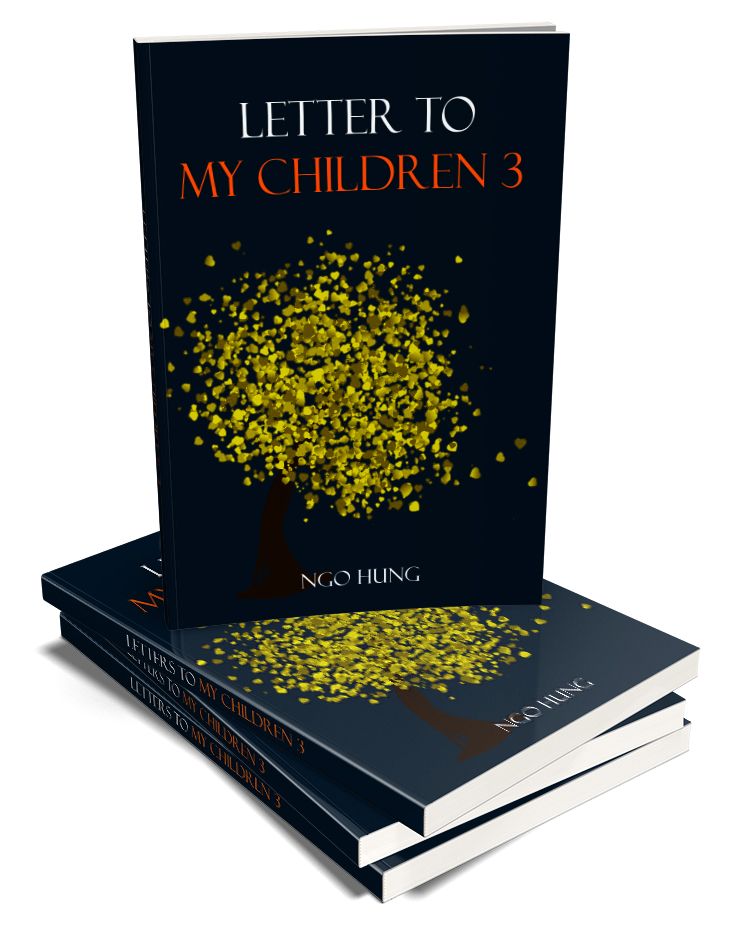
Multi-Perspective Review of Letters to My Child – Book 3
by Ngo Hung
- Content and Central Themes ⭐⭐⭐⭐ 4/5
In Letters to My Child – Book 3, the focus shifts more clearly toward the inner life of adulthood.
The book addresses themes such as disappointment, loss, loneliness, personal responsibility, and the process of growing through emotional hardship.
Compared to the previous volumes, this book is less instructive and more contemplative, emphasizing reflection over guidance.
- Depth of Thought ⭐⭐⭐⭐½ 4.5/5
Book 3 no longer presents the relationship as one between a guiding parent and a child, but rather as a dialogue between two adults.
The author respects the child’s independence, acknowledging their right to struggle, to make mistakes, and to feel uncertain.
This perspective gives the book strong humanistic depth and emotional maturity.
- Writing Style and Tone ⭐⭐⭐⭐½ 4.5/5
The writing style is slow, restrained, and introspective.
Instead of emotional intensity or dramatic expression, the author relies on quiet observations and thoughtful pauses.
The prose resembles reflective essays or philosophical letters, requiring patience but rewarding careful reading.
- Practical Value ⭐⭐⭐½ 3.5/5
This volume does not aim to provide practical solutions or life strategies.
Its value lies in encouraging readers to reconsider how they view difficulties, emotions, and personal growth.
It is more suitable for contemplation than for immediate application.
- Structure and Reading Rhythm ⭐⭐⭐⭐ 4/5
The book is organized into letters centered around specific themes.
While the structure is clear and consistent, the repeated tone may feel slow when read continuously.
Reading in short sessions enhances the overall experience.
- Emotional and Reflective Value ⭐⭐⭐⭐½ 4.5/5
The book does not seek to provoke strong emotional reactions, but rather to create a sense of being understood.
It resonates most with readers who are experiencing emotional fatigue, self-doubt, or quiet inner struggles.
⭐ Overall Rating
🌟 4.2 / 5 stars
Recommended for readers who:
- Have read the first two volumes
- Are navigating adulthood with emotional uncertainty
- Appreciate reflective, calm, and thoughtful writing
May not suit readers who:
- Prefer fast-paced or dramatic narratives
- Look for practical self-help techniques or clear solutions